
Chute Color Sorters
Review this route when the material can be metered into channels and maintains a consistent free-flowing presentation.
Review the chute platform
COLOR SORTER SELECTION
The first decision is not a model number. Start with the material, the defects or foreign material to remove, how the product feeds and the conditions of normal production.
CHUTE VS BELT
Chute and belt machines are different conveying platforms. Neither route is automatically better; the useful comparison is how consistently each one can present the real material for the required separation.
Review this route when the material can be metered into channels and maintains a consistent free-flowing presentation.
Review the chute platform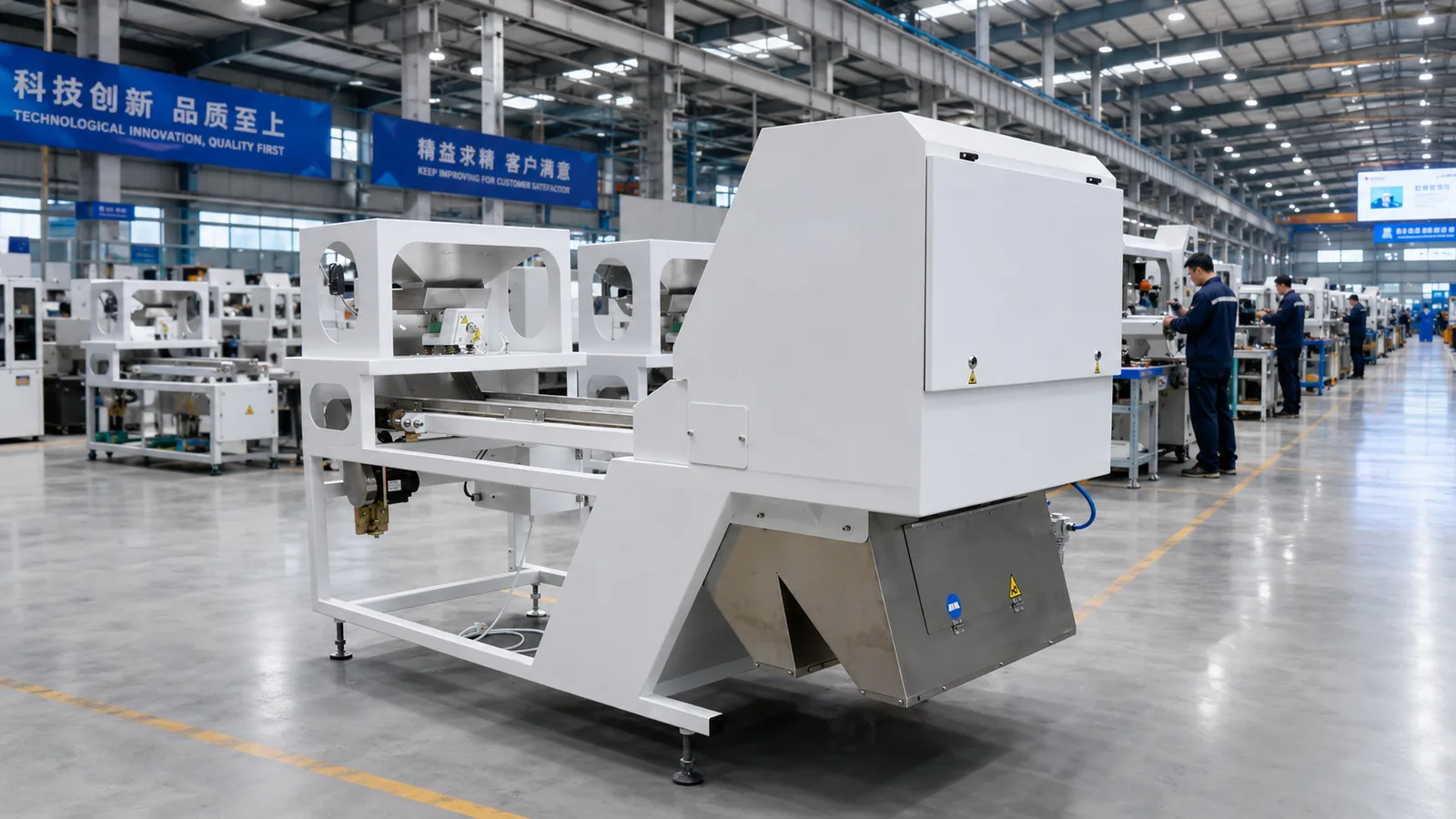
Review this route when controlled conveyor presentation needs consideration for fragile, irregular or less free-flowing material.
Review the belt platformExisting series remain organised under their platform pages: Chute — H Series and M Series; Belt — LD Series, CT / DCT Series and AT / DAT Series. Series review follows the platform decision.
6 SELECTION INPUTS
These six inputs replace separate selection, process and sizing checklists. Together they give the technical discussion a consistent starting point.
Product name, form, size range and normal variation.
What must be removed and whether it is visibly distinct.
How the product flows, overlaps, bridges or changes during feeding.
The sustained production requirement under usual conditions.
What should remain and what the reject stream needs to show.
Relevant feeding, power, compressed air, discharge and space information.
UNDERSTAND YOUR MATERIAL
Material category helps organise the discussion. The final route still depends on the representative feed, target defects and normal operating conditions.

Define visible kernel defects and foreign material against the accepted product.
View application
State the bean condition, target defects and accepted-product requirement.
View application
Review crop variation, contamination and how consistently the material feeds.
View application
Describe size variation, off-color material and visible impurities.
View application
Consider visible damage, shell, fragility and stable material presentation.
View applicationVERIFY BEFORE FINAL SELECTION
Paper selection narrows the route. A representative test then lets the feed, accepted product and reject stream be reviewed together under recorded test conditions.
Review Sample TestingRecord the representative starting condition.
Review the result against the agreed requirement.
Check removed defects together with saleable product.
Observe what moves between the accepted and reject streams.
Keep the comparison tied to the conditions used for the run.
LINE READINESS
The machine is one part of the operating line. Prepare the relevant site information before a configuration is finalised.
BUYER FAQ
Compare how the real material flows and how consistently each platform can present it. Confirm the route with representative material.
Provide the six selection inputs above, supported by clear sample photos or representative material where possible.
Possibly, but each material must be reviewed separately because feeding, presentation and separation targets can change.
It should show the feed, accepted product, reject and carryover together with the conditions used for the test.
PROJECT INQUIRY
Share the details needed to begin a practical machine-selection discussion through the existing contact route.
Share the material you process, the visible defects you need to remove and your target throughput. If you can send a representative sample, we can plan the selection around real test conditions.
Share the material you process, the visible defects you need to remove and your target throughput. If you can send a representative sample, we can plan the selection around real test conditions.